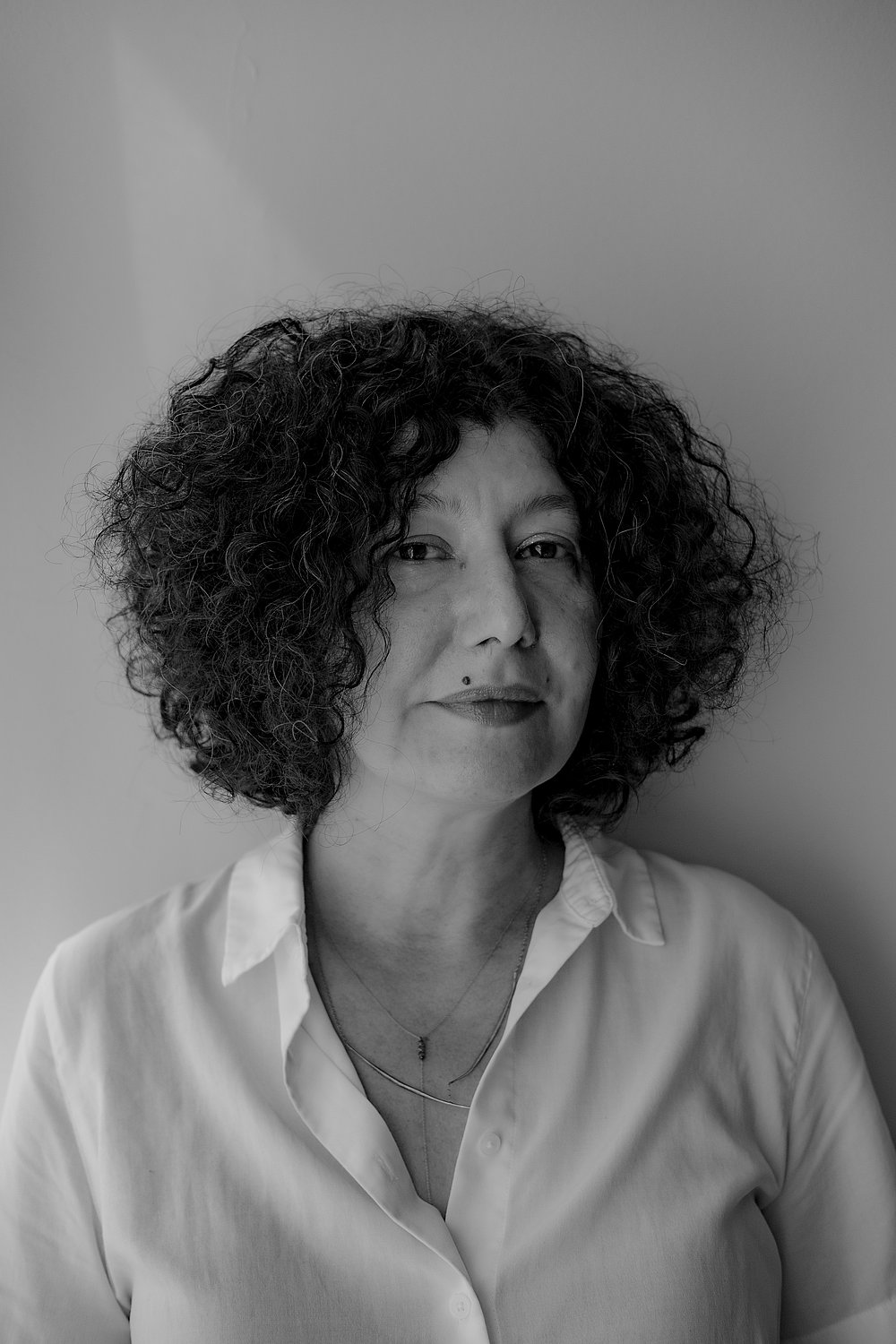
Banu Karaca (Principal Investigator BEYONDREST)
Banu Karaca (Principal Investigator BEYONDREST)
Banu Karaca works at the intersection of political anthropology and critical theory, art, aesthetics, and cultural policy, museum and feminist memory studies. She holds a PhD from the Graduate Center, The City University of New York. She has published on freedom of expression in the arts, the visualization of gendered memories of war and political violence, visual literacy, and restitution. She is the author of The National Frame: Art and State Violence in Turkey and Germany (Fordham University Press, 2021), and co-editor of Women Mobilizing Memory (Columbia University Press, 2019). In 2011, she co-founded Siyah Bant, a research platform that documented censorship in the arts in Turkey. She has been Visiting Assistant Professor of Cultural Studies at Sabancı University and Faculty Fellow at Columbia University’s Center for the Study of Social Difference. Her work has been supported by the Wenner-Gren Foundation, the Foundation for Arts Initiatives (FfAI), the ICI Berlin Institute for Cultural Inquiry, Stiftung Mercator, and the Volkswagen Foundation, among others. She was a Fellow of Art Histories and Aesthetic Practices in 2015/16 and a Fellow of Europe in the Middle East—The Middle East in Europe (EUME) in 2016/17 and 2019-2022, both research programs at the Forum Transregionale Studien. In April 2023, Banu Karaca was Aron Rodrigue International Visitor at the Stanford Humanities Center. Banu Karaca has been awarded a Consolidator Grant by the European Research Council for her project Beyond Restitution: Heritage, (Dis)Possession and the Politics of Knowledge (BEYONDREST).
Phone
+49 (0)30 89001 426
Research Field(s)
Political Anthropology, Critical Theory, Art, Aesthetics, Cultural Policy, Museum Studies, Feminist Memory Studies
Violent Possessions: Art, Cultural Heritage, and the Politics of Knowledge
Banu’s ongoing research in the framework of BEYONDREST examines how art dispossessed in episodes of state violence against non-Muslims in the late Ottoman Empire and the early Turkish republic has shaped the knowledge production on (post-)Ottoman heritage and the writing of art history. Concentrating on the Armenian genocide, the wealth tax (1942), the pogrom of September 6-7, 1955, and the 1964 exiling of more than 12,000 Greek-Orthodox residents, mainly from Istanbul, the research shows how in the course of the symbolic, material and economic dispossession that accompanied and fuelled these episodes of state violence, artworks were looted, confiscated, or made illegible. While art is often regarded as a form of expression that has the capacity to mobilize memory, Violent Possessions focuses on art, heritage and their institutional worlds as sites at which forgetting is established and maintained, that is organized, materially, legally, and discursively. It follows the traces of dispossessed art in Turkey and rereads selected diasporic art archives and collections in Europe and the U.S. Rather than solely ascertaining current location or ownership, this search for “lost” art presents an avenue to contemplate the workings of epistemic remembering and forgetting in the dominant taxonomies of art and heritage and to approach provenance research as a kind of open-ended memory work. Violent Possessions conceptualizes restitution not as an endpoint to mend loss and dispossession but as a starting point to transform the ways in which knowledge on art and heritage is made. As such this research project is also a inquiry into what such knowledge-making might look like outside of the paradigm of possession.