
Zoya Masoud (Postdoctoral Researcher BEYONDREST)
Zoya Masoud (Postdoctoral Researcher BEYONDREST)
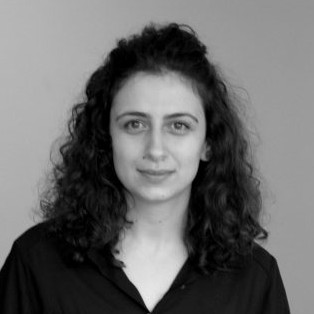
Zoya Masoud works at the intersection of postcolonial studies, post-foundational theory, and critical heritage studies. She joined the research project BEYONDREST in the fall of 2024. She received her Ph.D. (with a dissertation entitled, Dislocated. Heritage Construction through Experience of Loss in Aleppo), from the Technical University of Berlin as part of the DFG Research Training Group “Identity and Heritage,” where she was an associated researcher for the past five years. Between 2015 and 2019, she worked in various scientific and cultural institutions, including the German Archaeological Institute (Architectural Department), the Berlin Museum of Islamic Art, and the BTU Cottbus-Senftenberg. Prior to the outbreak of the Syrian war, she was a site architect in a range of restoration projects in the old cities of Damascus and Aleppo. She studied architecture and urban planning in Damascus, Hamburg, and Dar Es Salaam. Her research concerns marginalized individuals within the dominant discourses around heritage and identity. By examining the conflictual nature of such systems of meanings, Zoya’s investigations focus on their inconsistencies and instable constructions, and subjects, who are subjected to injury within these spaces. Working with qualitative research methods, Zoya has published on the (re)formations of ‘collective’ identity and heritage constructions, discourses of cultural heritage preservation under the atrocities of war and on temporalities in dealing with experiences of loss.
Irrestitutable: Inquiries into Hauntings of Absent Cultural Heritage
Amidst the ongoing armed conflicts and uprisings erupting in the global south, the transnational movement of art objects and humans from the MENA region to Europe has taken center stage in mass and social media, and in political debates. In the aftermath of the so-called “refugee crisis,” museums housing art from the MENA region have become sites of poignant encounters between the newcomers and objects extracted from the very places that the refugees identify as their “home” and where they endured the harrowing events of war, terror, destruction, and expulsion. This research is preoccupied with human-object relations and delves into how the dramatic events of destruction and looting of artifacts influence restitution debates within the communities of the regions that are subject to extraction and dispossession. The project explores how the layers of absence caused by the dislocation, looting, and destruction of objects manifest in the urban environments, in archival documents and cultural institutions, as well as in the experiences of locals, emigrants, scholars, and others in Europe and the Middle East. The investigation analyses the transformations in narratives around restitution and the failures of endeavors to fill the gap left behind by the absence. The project also studies the articulations of various communities and stakeholders in perceiving these cultural objects before and after their dispossession or destruction. It raises questions as: To which extend is the loss articulated, even if this loss and dispossession are only partial? What kind of specters are invoked, produced, or forgotten when debating the restitution of what is – at heart – irrestitutable?
Recent Publications
“Of Exclusive Victimhood and its Competitive Narratives in Post-Assad Syria", Focaalblog, 30 March 2026, https://doi.org/10.5281/zenodo.19441293
“Architectures of Colonialism: Constructed Histories, Conflicting Memories”, in: Allegra Lab, February 2026.
“Shades of Locality in the Old Neighborhoods of Aleppo: Some Field Notes on the Meaning of ‘Place of Origin’ asl”, in: Reconstructing Neighborhoods of War, ed. Birgit Schäbler, Beirut 2025, 10.5281/zenodo.19050747
“Dislocation”, in: Dis:Connectivity in Processes of Globalisation: Concepts, Terms and Practices, eds. Christopher Balme, Burcu Dogramaci and Roland Wenzlhuemer, De Gruyter, 2025, pp. 93-99 (peer-reviewed). https://doi.org/10.1515/9783111600345-013
“Inheriting a Dislocatory Moment”, in: Recalibrating Syria: New Openings for Anthropological Engagement, AllegraLab, 2025, https://allegralaboratory.net/inheriting-a-dislocatory-moment/.
“Verlust lokalisieren: Auf der Suche nach einem unvergänglichen Objekt in Aleppo,” in: Geographica Helvetica, Special Issue: Geographien des Verlusts, Band 80, 2025, pp. 57–65, doi.org/10.5194/gh-80-57-2025 (blind peer-reviewed)
“Let Us Imagine a Parallel Universe,” in: TRAFO-Series “5in10,” TRAFO - Blog for Transregional Research, 30 January 2025, trafo.hypotheses.org/54586, doi.org/10.58079/137gg