
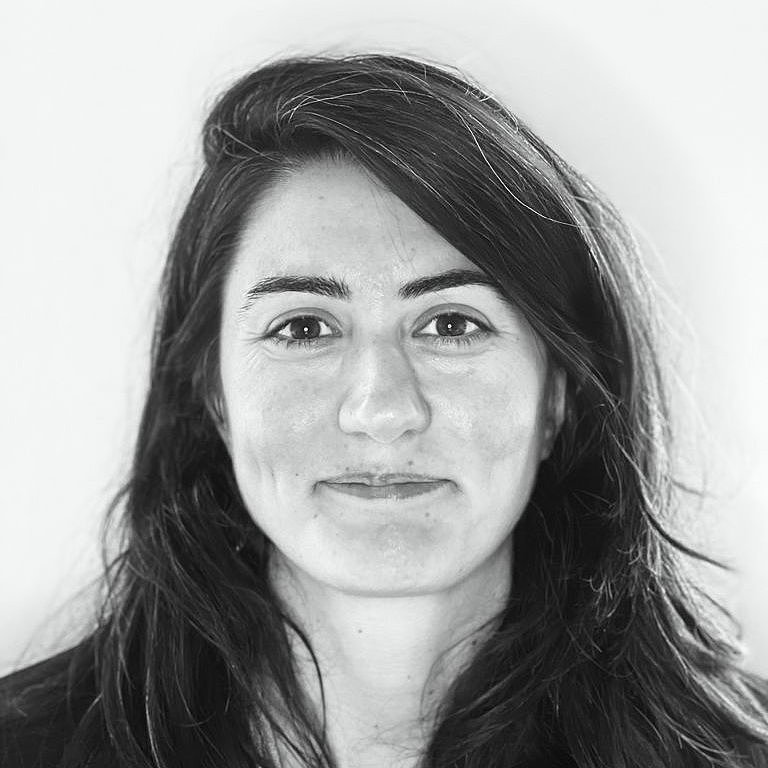
Çiçek İlengiz (Postdoctoral Researcher BEYONDREST)
Çiçek İlengiz (Postdoctoral Researcher BEYONDREST)
Çiçek İlengiz works at the intersection of heritage studies, the anthropology of emotions, and memory studies. She completed her PhD at the Center for Research on Antisemitism at the Technical University Berlin. Her doctoral research, carried out during a fellowship at the Research Center for the History of Emotions, hosted by the Max Planck Institute for Human Development (2019), explored how genocidal violence is translated into collective memory, radical political imaginations, and practices of healing in the Kurdish region of Turkey.
She is currently working on her second book project, Rooting into the World: Inheriting Love, Lack and Failure in Anatolia, which examines the affective politics of the World Heritage regime in contemporary Turkey. Bringing together case studies from cultural, intangible, and environmental heritage, the project asks the question “How does one inherit what is supposedly belonging to everyone?” During her time at the Empires of Memory Research Group at the Max Planck Institute for the Study of Religious and Ethnic Diversity (2019-2022), she developed the first phase of this research, which explored practices of inheriting love through Mevlevi religious heritage. In its second phase, conducted as part of the ERC funded research project BEYONDREST, she turns to the notion of lack through the lens of archaeological heritage.
Her recent publications engage with the conceptual discussions on inheritance, temporality, and commemoration. She is a member of the editorial collective of Allegra Laboratory: Anthropology for Radical Optimism, an online platform committed to politically engaged knowledge production.
Inheriting Anatolia: Representation, Knowledge Production and Imagination
The Turkish government’s 2013 demand for restitution of several artifacts has fueled heated debates about the structures of colonial and imperial relations and the limits of decolonial critique. Raising the question of ‘what belongs to whom and under which conditions’, these debates have opened a new ground to reinforce civilizational narratives onto the politics of dispossession. Inheriting Anatolia investigates the ways in which the debates on restitution are transforming the heritage field in Turkey. The research project has been designed to illustrate how a region inheriting imperial history (that has usually been left out of restitution debates) can change our perspectives on dispossession and ownership in the field of heritage.
The project asks: ‘How do we inherit what belongs to everyone’ and aims to answer this question through ethnographic, archival and legal research. It examines the intertwined nature of histories of state violence and their effects in the constitution of the legal notions of ownership and inheritance in the field of heritage. To grasp the role of dispossession in the (re)production of Anatolian artifacts as ‘universal’ or ‘world heritage,’ it traces the ways in which the artifacts are cataloged, classified, and represented in the archives of selected museum collections in Turkey as well as in Western Europe. Mobilizing ethnographic research in multiple sites in Anatolia, the project analyzes the modalities of inheritance that are cultivated by actors in the heritage field. Conceptually it (re)connects the notions of heritage and inheritance that are severed by global heritage regimes, which redraw the boundaries between what is considered public and private.
Recent Publications
Çiçek İlengiz with Cook et al., “Empathy and Dialogue: Embracing the Art of Creative Review,” In: Anthropology and Humanism, Volume 49, Issue 2, pp. 88-92, December 2024, https://doi.org/10.1111/anhu.12536